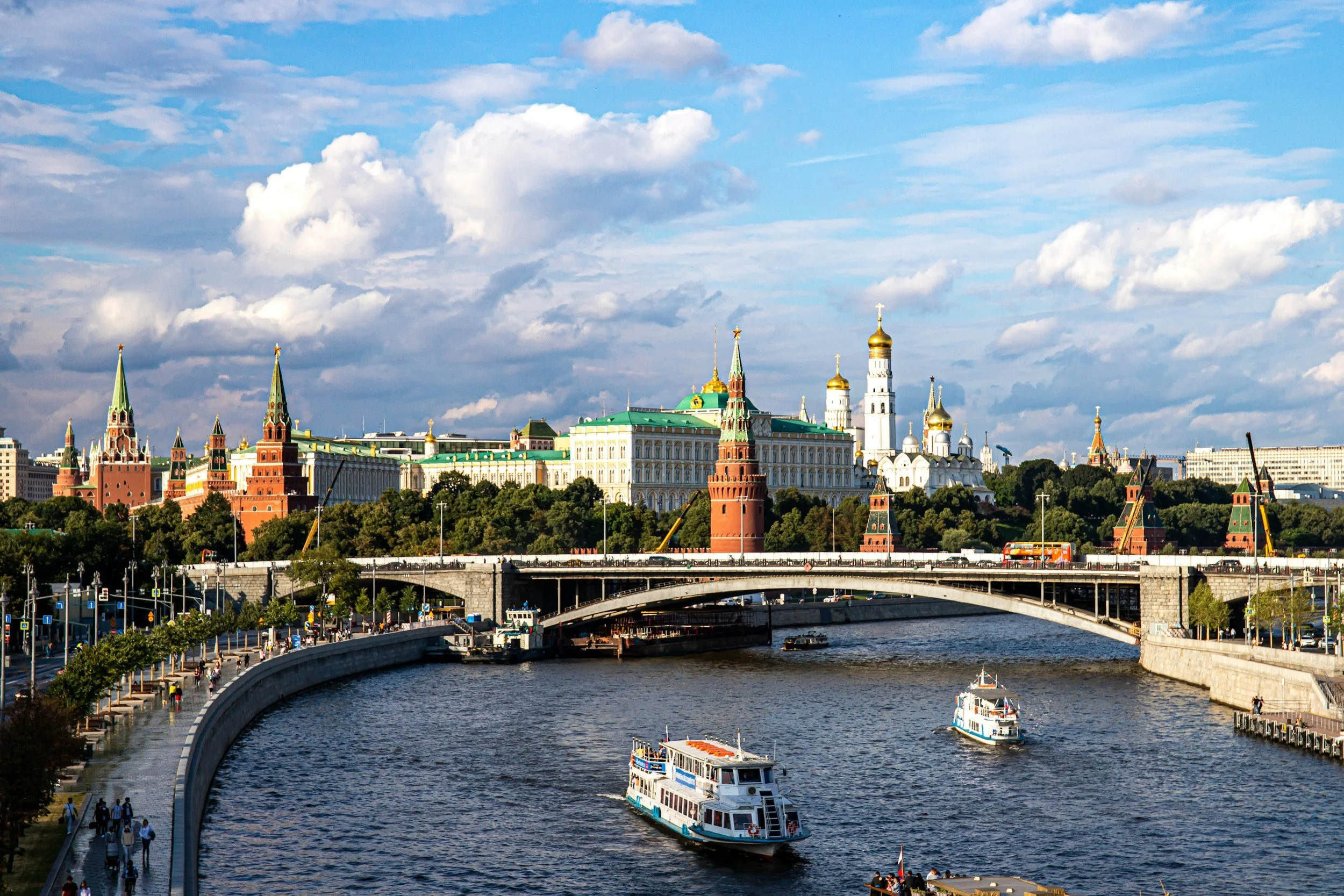
Moscow: A Global City Economy Built for Scale, Resilience, and Opportunity
Moscow is one of the world’s most powerful and complex urban economies. As the capital of Russia and the largest city in Europe by population, it functions not only as the political center of the country, but also as its primary financial hub, innovation engine, and consumption market. Over the past decades, Moscow has evolved into a diversified metropolitan economy comparable in scale and sophistication to the world’s leading global cities.
Despite geopolitical pressure and external restrictions, Moscow has demonstrated a rare degree of economic resilience, adaptability, and internal market strength, making it a compelling environment for business, capital deployment, and long-term strategic operations.
1. Scale of the Moscow Economy
Moscow’s economic weight is exceptional by any global standard.
The city generates over 20% of Russia’s total GDP, despite representing a small fraction of national territory.
By purchasing power parity (PPP), Moscow consistently ranks among the top 3–5 largest city economies in the world, alongside New York, Tokyo, and Shanghai.
The metropolitan economy exceeds $1 trillion in output (PPP), placing Moscow ahead of many sovereign states.
This scale creates a powerful internal market, strong fiscal capacity, and deep business ecosystems that allow companies to grow without immediate reliance on exports or external demand.
2. Economic Structure: A Service-Driven Megacity
Moscow’s economy is highly modern in structure.
Services as the Core Engine
Over 80–85% of Moscow’s gross regional product comes from services, including:
Financial services and banking
Insurance and asset management
Legal, consulting, and professional services
IT, software, and digital platforms
Wholesale and retail trade
Logistics, transport, and infrastructure services
This composition is similar to New York, London, or Paris and reflects Moscow’s role as a decision-making and coordination center for large corporations and state-linked enterprises.
Industry and High-Value Manufacturing
While manufacturing plays a smaller role than services, Moscow remains a center for:
Advanced engineering
Electronics and instrumentation
Pharmaceuticals and medical equipment
Defense-adjacent and high-precision industries
Many production chains are coordinated from Moscow even when physical facilities are located in other regions.
3. Financial Capital of a Continental Economy
Moscow is the undisputed financial center of Russia and one of the most concentrated financial hubs in Eurasia.
Headquarters of major banks, insurers, investment firms, and holding companies are located in Moscow.
The city controls the majority of corporate lending, capital allocation, and investment decision-making in the country.
Large volumes of internal capital circulate within Moscow’s financial system, supporting business activity even during periods of restricted external financing.
Sanctions and Financial Adaptation
Following sanctions and restrictions on access to Western capital markets, Moscow’s financial system adapted rapidly:
Expansion of domestic capital markets and ruble-denominated instruments
Growth of alternative settlement systems and non-Western payment channels
Increased role of state and quasi-state financing mechanisms
Stronger integration with financial partners in Asia, the Middle East, and emerging markets
For operating businesses, this translated into continuity of financing, payments, and liquidity, rather than systemic disruption.
4. Consumer Power and Internal Demand
One of Moscow’s greatest economic advantages is its extraordinary concentration of purchasing power.
Moscow residents have significantly higher average incomes than the national average.
The city is the largest consumer market in Eastern Europe and one of the largest in Europe overall.
Retail, real estate, food services, healthcare, education, and personal services are driven primarily by domestic demand, not exports.
Even during periods of sanctions and reduced imports, consumer demand has remained robust due to:
Rapid substitution of foreign brands with domestic or non-Western alternatives
Parallel imports and restructured supply chains
Stable employment and income levels within the city
For businesses focused on local sales, services, or B2B operations, Moscow offers scale comparable to an entire medium-sized country.
5. Labor Market and Human Capital
Moscow concentrates the most skilled and productive workforce in Russia.
Top universities, research institutes, and technical schools are based in the city.
The labor market includes strong talent in IT, engineering, finance, analytics, marketing, and management.
Unemployment levels are structurally low compared to many global megacities.
Cost Advantage vs Global Cities
Compared to cities like London, New York, or Paris:
Labor costs for highly skilled professionals are often lower in real terms
Office space and operating expenses remain competitive
Business services offer strong value-for-money ratios
This creates a favorable environment for regional headquarters, shared service centers, IT hubs, and analytical teams.
6. Infrastructure and Urban Systems
Moscow has invested heavily in infrastructure over the past 15 years.
One of the largest and most efficient metro systems in the world
Extensive road networks and logistics hubs
Advanced digital public services and smart-city platforms
Reliable utilities and communications infrastructure
For businesses, this means operational reliability, predictable logistics, and efficient employee mobility — critical factors often underestimated in emerging or transitional markets.
7. Doing Business in Moscow Under Sanctions
A common misconception is that sanctions have made Moscow an unfavorable or non-functional business environment. In practice, the reality is more nuanced.
What Changed
Reduced presence of Western consumer brands
Limited access to some foreign technologies
Shift away from EU and US capital markets
What Remained Strong
Domestic market scale and demand
Functioning banking and payment systems
Government support for strategic sectors
Active trade with Asia, Middle East, CIS, and Global South
Entrepreneurial adaptation and import substitution
For many sectors — especially services, consulting, real estate, logistics, IT, healthcare, education, and internal trade — Moscow remains not only viable but highly profitable.
Companies that understand regulatory specifics and market mechanics can operate successfully without exposure to sanction risks.
8. Comparison with Other Global Cities
New York - Global finance, capital markets
London - International law, finance, services
Shanghai - Manufacturing, trade, scale
Dubai - Global logistics, low taxes
Moscow - Internal market scale, financial concentration, resilience
Moscow’s uniqueness lies in its self-sufficient economic gravity: it does not rely exclusively on foreign capital, tourism, or exports to sustain growth.
9. Long-Term Outlook
Moscow’s strategic trajectory focuses on:
Digitalization and automation
Financial sovereignty and alternative markets
Technological self-reliance
Expansion of service and knowledge-based sectors
These trends position Moscow as a stable long-term platform for businesses oriented toward Eurasia, emerging markets, and domestic consumption.
How RCPM aSSIA Helps Businesses Succeed in Moscow
Operating in a large, complex city economy requires local expertise, strategic clarity, and risk awareness.
At RCPM, we support companies, investors, and entrepreneurs in navigating Moscow’s economic environment with confidence.
Our Core Services
Market Entry & Expansion Strategy
Economic, Financial, and Industry Analysis
Business Structuring & Localization Support
Partner Search and Deal Support
Risk Assessment and Regulatory Navigation
We help our clients identify opportunities, avoid costly mistakes, and build sustainable operations in Moscow and beyond.